From the pre election campaign of ANO and the Motorists party, one might easily have gained the impression that the current coalition would focus on dramatic changes in economic policy after the government of Petr Fiala. In reality, however, the opposite is visible. There is rather calm continuity and essentially a continuation of similar principles of economic policy.
The only exception is the current abolition of the National Economic Council of the Government, known as NERV. By doing so, Finance Minister Alena Schillerová is dismantling an institution that was not only a source of expertise but, above all, of independent expertise, meaning it was not tied to any political party.
In every developed country there exist what are commonly referred to as public policy think tanks. These organisations deal with areas such as education, healthcare, foreign trade and investment, monetary policy, and pension reform. The United States has Brookings, the Hoover Institution, RAND, Carnegie, the American Enterprise Institute, and the Cato Institute. Germany has the Ifo Institutes, the Kiel Institute for the World Economy, the Bertelsmann Stiftung, the Mercator Institute for China Studies, and the Friedrich Ebert Foundation. The United Kingdom has the Adam Smith Institute, the Institute of Economic Affairs, the Centre for Policy Studies, Chatham House, Demos, and the Fabian Society, which is only a selection of the largest and most well known. In addition, dozens of others exist in each of these countries.
Unlike these countries, the Czech Republic does not really have similar think tanks focused on public policy. NERV was, to some extent, an attempt to create something comparable. It operated with a minimal budget but successfully. This institution, composed of economic experts and business representatives, provided proposals on public policy and did so from an independent position.
By abolishing NERV, the government is not helping itself, even though it claims that the Ministry of Finance will create its own group of experts. With this step, the government will lose far more than it gains. First of all, it will lose voices that are independent of self serving private interests. A government appointed group of experts will more likely tell Minister Schillerová what she wants to hear.
The second, and even greater loss for the finance minister will be the loss of macroeconomic and microeconomic expertise. From Minister Schillerová we now constantly hear which budget expenditures were underfunded and had to be increased. We hear somewhat about the need for additional sources of budget revenue, but we do not hear at all which specific tax sources should provide them. Above all, we lack any explanation of possible revenue options and comparisons with alternative sources. Her public comments end there. We never learn why she emphasises certain new expenditures rather than others, whether taxes should be increased or reduced, or whether she recognises the inflationary impact of raising the salaries of public sector employees. These are only a few examples of issues that economists from NERV, or possibly the National Budget Council, could have addressed.
Any loss of independent economic expertise from public debate is particularly harmful in the Czech Republic. Independent economic think tanks essentially do not exist there, and therefore there is no qualified public debate on economic policy. In this respect the Poles are far ahead, and it is visible in their economic growth policy. Almost all Czech debate about economic policy takes place on television channels such as CNN Prima News and Czech Television. That can help somewhat, but it does not carry the same weight as studies produced by think tanks.
This weakness shows itself in concrete matters. For example, the construction of motorways today is massively delayed, despite the fact that EU support for them was negotiated as a priority thirty years ago and the country actually received that support. Yet the motorways waited. Among other things, there was no strong independent pressure from experts.
There are many more such issues. One critical question is Europe’s declining competitiveness, as highlighted in a study by the former president of the European Central Bank, Mario Draghi. The dramatic decline in population growth across Europe, including in the Czech Republic, is not only another barrier to economic growth but also a source of challenges related to migration, pension financing, a tight labour market, healthcare funding, outdated primary education, and other public services. Pension reform itself has been discussed by the Ministry of Labour since the beginning of the economic transition, yet these debates have still not produced a broadly accepted reform.
The poverty of public debate in the Czech Republic is also reinforced by universities. In all developed countries of Europe, as well as in the United States, Canada, Australia, and South Korea, universities play an important role in debates on economic policy. In the Czech Republic this is not the case. Of course there are individuals at every Czech university who are strongly interested in economic policy, but their opportunities to contribute are limited, uncoordinated, and exceptional.
An even bigger problem is the orientation of Czech universities. Under pressure from global competition and lacking incentives, they focus more on teaching theory, international exchanges, unproductive research, and applications in corporate business. When teaching economic policy they are often forced to bring in economists from practice because their own academic resources are directed elsewhere. The teaching of international economic policy is in an even worse condition.
Under the previous government the Czech economy was described by Minister Schillerová and her colleagues as “scorched earth”. In reality it was almost the strongest performing economy in the European Union. Moreover, after winning the election the ANO movement has essentially continued the same macroeconomic policy as the Fiala government, despite violating the law on fiscal responsibility.
If we want to have a high quality public debate about economic policy and public services, we need to support the creation of various specialised think tanks. Such debate is necessary because we must address the energy crisis, national security, a growing shortage of labour, the revolution in information technology and artificial intelligence, and the financing of public services.
By closing NERV, Minister Schillerová is doing the exact opposite. Instead of creating conditions for the emergence of think tanks, she is sending the signal that the best solution is simply whatever is prepared quietly within the government cabinet.
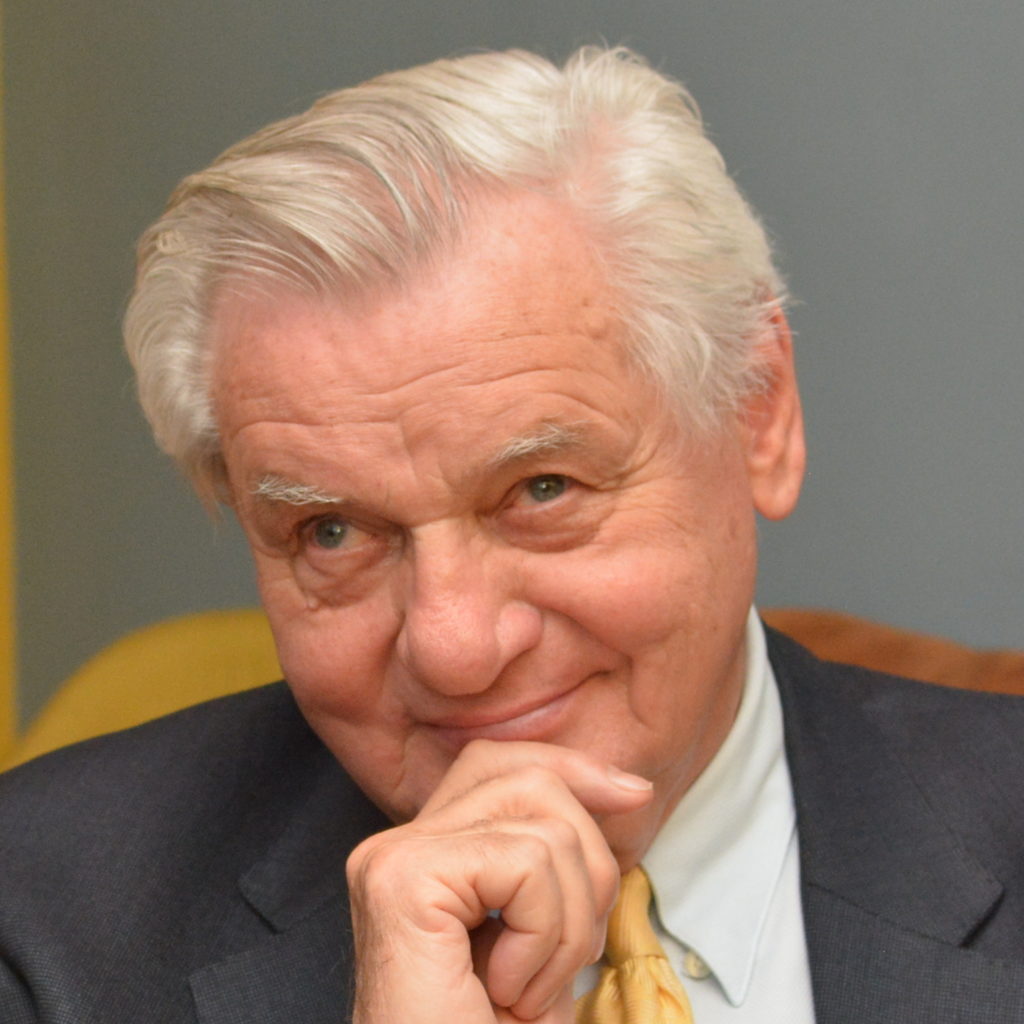
The author is a former adviser to the World Trade Organization and the World Bank and works at the Faculty of Social Sciences at Charles University.